
Adidas's IaC Shift: From Central Control to Team Autonomy

Alps Wang
Mar 4, 2026 · 1 views
Decentralizing IaC: A Scalable Model
Adidas's move from a centralized to a decentralized Infrastructure as Code (IaC) delivery model for its data platform is a compelling case study in addressing scalability challenges inherent in rapid growth. The key insight is that the delivery model itself, not just the tooling, can become a bottleneck. By shifting ownership of infrastructure definitions to domain-aligned teams and establishing clear boundaries, Adidas has aimed to balance governance with the autonomy necessary for faster iteration. This approach, which involves creating reusable modules, standardized patterns, and an abstracted CLI, is highly relevant for any large organization grappling with the complexities of managing a growing data infrastructure. The emphasis on automation-first governance and clear role delineation (framework owners, developers, consumers) is crucial for ensuring safety and consistency in a decentralized environment.
While the article highlights the benefits of reduced backlogs and increased team agility, a potential limitation lies in the initial investment and ongoing effort required to establish and maintain the reusable building blocks, tooling frameworks, and policies. The success of this model hinges on the quality of these foundational components and the ability of domain teams to effectively leverage them. Furthermore, ensuring consistent adoption and preventing drift from standardized patterns across diverse domain teams can be an ongoing challenge. The article implies that this is a cultural and organizational shift, which often requires sustained effort in training, communication, and fostering a collaborative mindset. The success of this decentralization also depends on the maturity of the domain teams in understanding and managing their infrastructure responsibilities effectively. The technical details, such as the layered IaC structure and the custom CLI, are well-articulated, but the long-term maintainability and evolution of these custom tools in a fast-changing cloud-native landscape warrant consideration.
Key Points
- Adidas transitioned its data platform infrastructure delivery from a centralized Infrastructure as Code (IaC) model to a decentralized approach.
- The shift moves ownership of infrastructure definitions from a central platform team to domain-aligned teams, promoting product-oriented platform engineering.
- This decentralization aims to address scaling challenges and reduce overhead caused by increased request volumes and coordination in a centralized model.
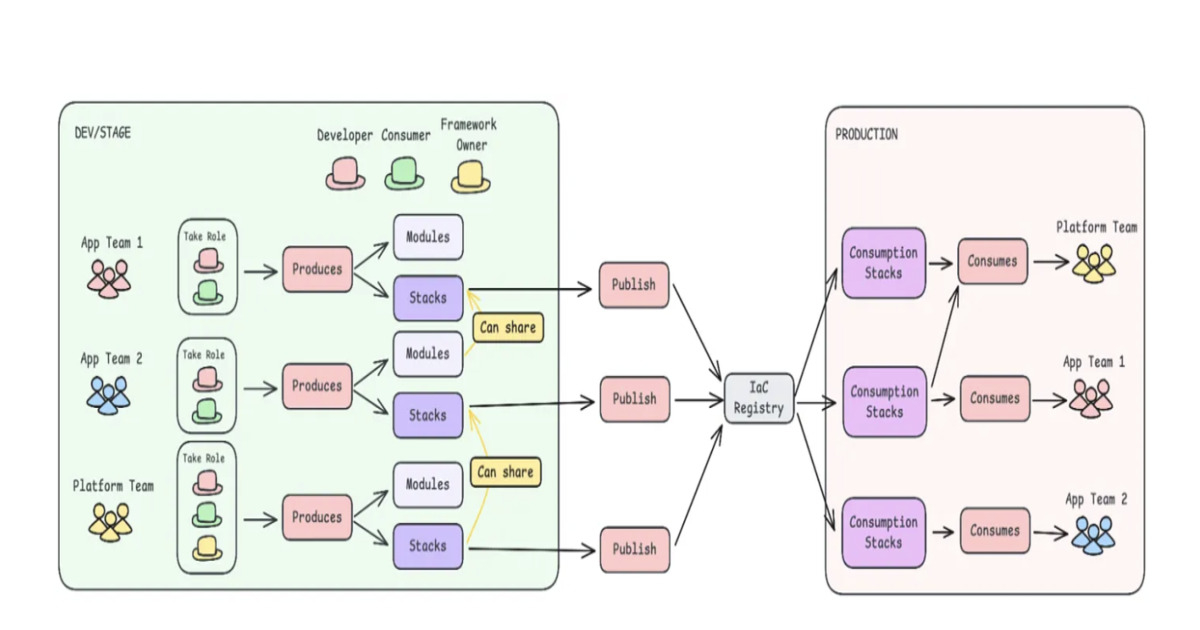
- A layered IaC structure (modules, stacks, consumption configurations) and a custom CLI abstract complexity and embed governance, enabling autonomous delivery within predefined boundaries.
- The reorganization formalizes roles (framework owners, developers, consumers) and emphasizes automation-first governance and clear ownership boundaries.
- The move is presented as both a technical and a cultural/organizational transformation, aligning with broader industry trends towards self-service infrastructure.
📖 Source: From Central Control to Team Autonomy: Rethinking Infrastructure Delivery
Related Articles
Comments (0)
No comments yet. Be the first to comment!