
Amazon Key: Event-Driven Architecture Deep Dive

Alps Wang
Feb 5, 2026 · 1 views
Architectural Transformation Unpacked
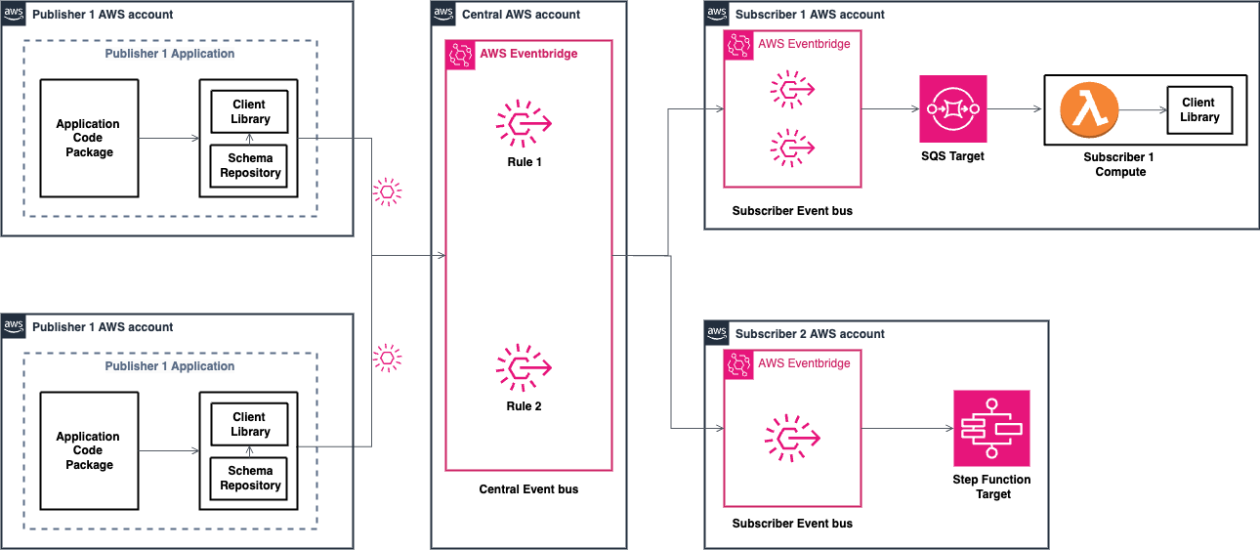
The AWS Architecture Blog post on the Amazon Key Suite's event-driven architecture provides a valuable case study for modernizing complex systems. The article's key insight lies in the successful migration from a tightly coupled, monolithic design to a decoupled, event-driven one, leveraging Amazon EventBridge. The implementation of a custom schema repository with client-side validation is particularly noteworthy, addressing the limitations of EventBridge's native schema validation. This approach prioritizes developer experience and facilitates efficient cross-team collaboration, resulting in significant improvements in integration time and overall development velocity. The emphasis on standardized components like the client library and subscriber constructs library further streamlines the development process.
However, the article could benefit from more detailed technical explanations. While it highlights the benefits of the custom schema repository, it lacks specifics regarding its implementation. For instance, the technologies used for the repository (e.g., database, API) and the client library's code generation process remain unclear. Furthermore, a discussion of the challenges encountered during the migration, such as data migration strategies or backward compatibility concerns, would enrich the analysis. Although the article mentions a 99.99% success rate, details on the monitoring and alerting setup are limited. A more comprehensive examination of the failure scenarios and the recovery mechanisms would be beneficial. Finally, the article focuses exclusively on AWS services, and a comparison with alternative event-driven architectures (e.g., Kafka, RabbitMQ) and their respective schema management solutions would broaden the perspective.
Key Points
- Transition from a monolithic, tightly-coupled architecture to an event-driven design using Amazon EventBridge.
- Implementation of a custom schema repository with client-side validation for improved developer experience and efficient schema management.
- Use of client libraries and subscriber constructs libraries for standardized event handling and infrastructure provisioning.
- Significant improvements in reliability, scalability, and developer productivity, including reduced integration time and faster event onboarding.
Related Articles
Comments (0)
No comments yet. Be the first to comment!