
OpenAI's Agents API: Build Advanced AI in the Cloud

Alps Wang
Sep 11, 2026 · 1 views
Orchestrating Complex AI Workflows
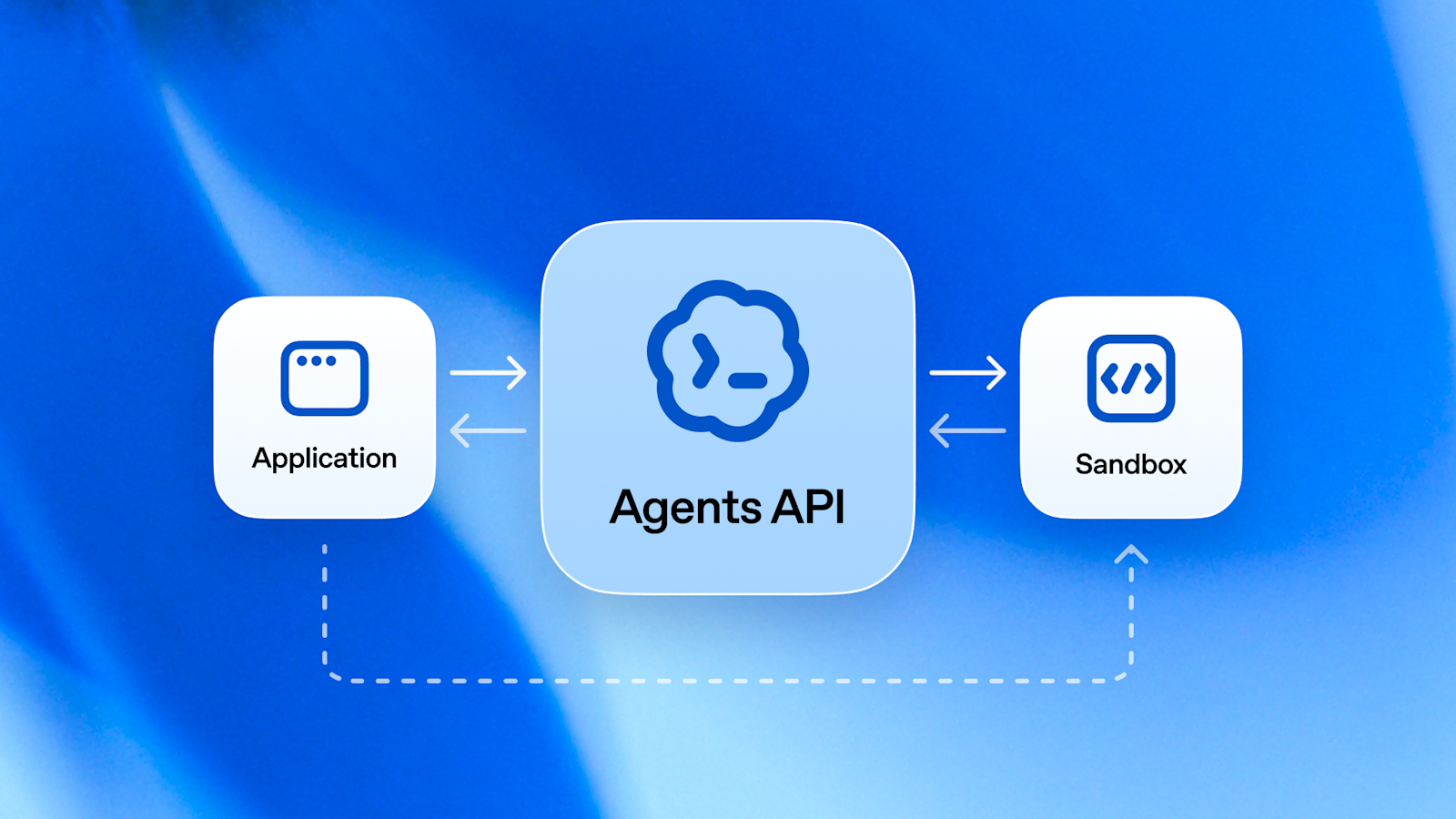
The introduction of the Agents API represents a substantial leap forward in making long-running, sophisticated AI agents accessible to a broader developer audience. By abstracting away the complexities of harness management, context handling, tool orchestration, and reliable long-term execution, OpenAI is significantly lowering the barrier to entry for building powerful AI applications. The flexibility in choosing compute environments, from fully managed OpenAI sandboxes to custom infrastructure, is a key strength, catering to diverse needs and compliance requirements. The emphasis on features like subagent parallelization and efficient tool usage directly addresses critical challenges in agent development, promising faster execution and improved resource utilization. The open-source nature of the underlying Codex harness also fosters transparency and allows developers to understand the core mechanisms at play.
However, several considerations warrant attention. While the API is in public beta, the long-term implications of relying on OpenAI for core agent infrastructure, particularly regarding vendor lock-in and the evolution of the underlying harness, will be crucial for enterprise adoption. The 'gpt-6-astra' model mentioned in the example suggests an evolving model landscape, and developers will need to manage potential compatibility shifts. Furthermore, while cost is based on token and tool usage, the operational complexity and potential for unforeseen expenses with highly concurrent or long-running agents remain a concern. The effectiveness of the 'compacts' context management will also be tested in real-world scenarios with extremely long and complex sessions. Finally, the success of the ecosystem partner integrations will be vital for those who cannot utilize OpenAI's hosted sandboxes.
This API is a boon for developers and organizations looking to build sophisticated AI agents without investing heavily in custom orchestration infrastructure. Startups and established companies alike can leverage this to accelerate their AI agent development, particularly for tasks involving complex analysis, multi-step workflows, and autonomous operations. This includes use cases in code generation and debugging (as hinted by the Codex connection), data analysis, system monitoring, customer support automation, and logistics management, as seen in the Nash.ai example. The ability to delegate tasks to subagents and manage long-running sessions is particularly beneficial for applications requiring deep investigation or continuous operation. The API empowers developers to focus on their unique business logic and domain-specific tools rather than the foundational mechanics of agent execution.
Key Points
- Introduces a managed harness and infrastructure for building and running cloud-based AI agents.
- Simplifies agent creation with a single API call, specifying task, model, tools, and environment.
- Offers flexible compute environments: OpenAI-hosted sandbox, custom infrastructure, or partner integrations.
- Features include advanced context management for long sessions, efficient tool search and programmatic tool calling.
- Enables parallel execution of complex tasks through multi-agent support and subagents.
- Built on an open-source Codex harness, providing transparency and a foundation for developer understanding.
- Available in public beta, with pricing based on token and tool usage.
📖 Source: Introducing the Agents API
Related Articles
Comments (0)
No comments yet. Be the first to comment!