
AI Coders: From Vibe to Sophistication

Alps Wang
Apr 8, 2026 · 1 views
The Evolving AI Coding Assistant Landscape
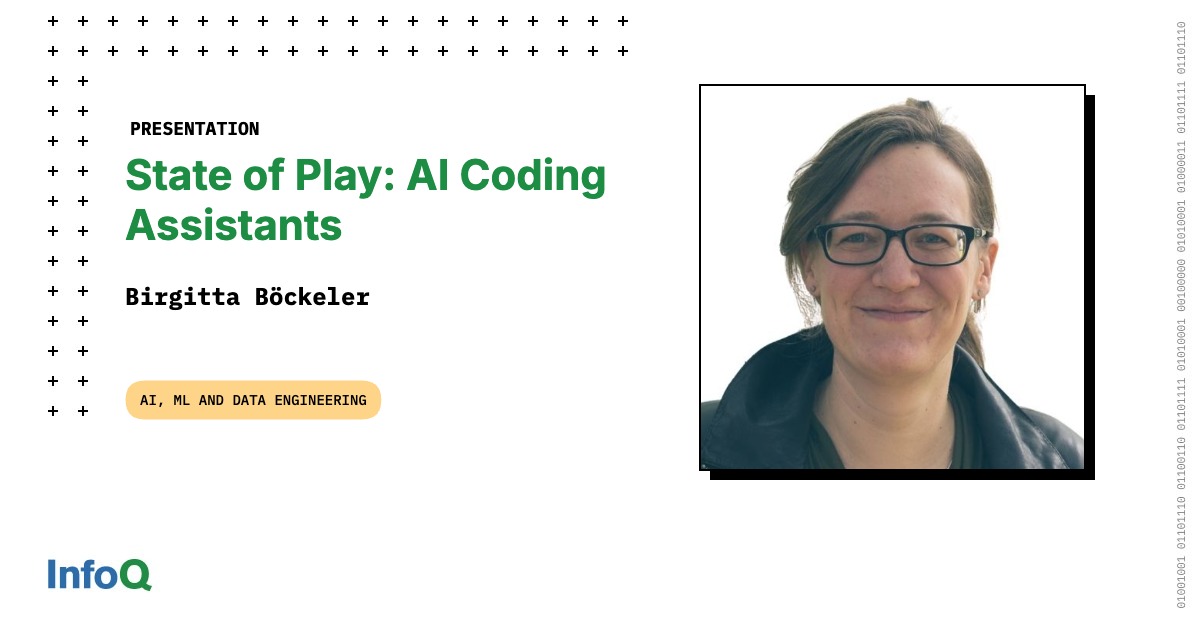
Birgitta Böckeler's presentation provides an excellent overview of the current state and trajectory of AI coding assistants, particularly highlighting the crucial evolution from simple autocompletion to sophisticated agentic systems. The deep dive into 'context engineering' is particularly insightful, demystifying concepts like skills, commands, and subagents. The emphasis on modularizing information for LLMs, enabling just-in-time loading, is a key takeaway, directly addressing the limitations of fixed context windows and improving efficiency. Böckeler’s practical advice for leaders on balancing speed, maintainability, security, and cost is highly relevant for organizations looking to adopt these tools. The discussion on increasing agent autonomy and the implications for human supervision, alongside the challenges of sandboxing and resource management, paints a realistic picture of both the potential and the hurdles ahead.
However, while the presentation effectively showcases advancements, a deeper exploration into the practical implementation challenges and best practices for managing the non-determinism inherent in LLMs would be beneficial. The speaker touches upon it, but the implications for production-ready systems, especially concerning debugging and predictable behavior, warrant further discussion. Additionally, while the rise of CLI-based assistants and their integration into CI/CD pipelines is mentioned, a more detailed look at the security implications and robust sandboxing strategies for these unattended agents would be valuable. The potential for prompt injection attacks, as briefly noted, is a significant concern that requires more in-depth examination from a database and security perspective, especially as these agents gain more autonomy and access to sensitive systems.
Key Points
- AI coding assistants have evolved significantly from simple autocompletion to sophisticated agentic systems.
- Context engineering is a critical development, focusing on curating information for LLMs to improve results.
- Concepts like 'skills' modularize rules and context, enabling just-in-time loading by LLMs to optimize context window usage.
- The trend is towards increased agent autonomy, reducing human supervision, with implications for local and cloud-based development.
- Challenges remain in managing non-determinism, ensuring security through sandboxing, and balancing cost with effectiveness.
- Migration and modernization initiatives are prime use cases for AI-assisted workflows leveraging these advancements.
Related Articles
Comments (0)
No comments yet. Be the first to comment!