
ClickHouse's Streaming HTTP API: Direct Data Access

Alps Wang
Sep 5, 2026 · 1 views
ClickHouse as a Direct API Layer
The introduction of named HTTP handlers in ClickHouse 26.8 marks a compelling advancement for simplifying data access architectures. By enabling direct exposure of controlled ClickHouse queries via HTTP, it effectively removes the need for a separate, often boilerplate-heavy, API layer for read-heavy workloads. This is particularly beneficial for scenarios where the primary requirement is to serve data directly from ClickHouse with minimal transformation or complex business logic. The ability to define handlers with typed parameters, including path parameters through regular expressions, offers a flexible and powerful way to construct dynamic APIs. This directly addresses a common pain point in data-intensive applications where setting up and maintaining intermediary API services can be time-consuming and resource-intensive.
However, the article correctly points out that this feature is not a complete replacement for application layers. Complex business logic, orchestration, or application-specific validation still necessitate a dedicated application service. The security implications of directly exposing database queries, even with user grants, warrant careful consideration. While the api_user setup with no_password and HOST LOCAL is suitable for internal use cases, production deployments would require more robust authentication and authorization mechanisms. Furthermore, the performance implications of high-volume, concurrent API requests directly hitting ClickHouse handlers, especially for complex queries, should be thoroughly benchmarked. While ClickHouse is known for its speed, unmanaged direct exposure could potentially lead to performance bottlenecks or resource exhaustion if not properly managed and monitored. The article could benefit from more detailed guidance on production-ready security configurations and performance tuning for these HTTP handlers.
Key Points
- ClickHouse 26.8 introduces named HTTP handlers, allowing direct exposure of ClickHouse queries via HTTP.
- This feature can eliminate the need for a separate API layer for read-heavy workloads, simplifying architecture.
- Handlers support GET, POST, PUT, and DELETE methods.
- Typed parameters can be defined for handlers, allowing dynamic query construction via URL query strings or form fields.
- URL path parameters can be captured using regular expressions for more flexible routing.
- While powerful for direct data serving, complex business logic and validation still require a separate application layer.
- Security and performance considerations for production deployments need careful attention.
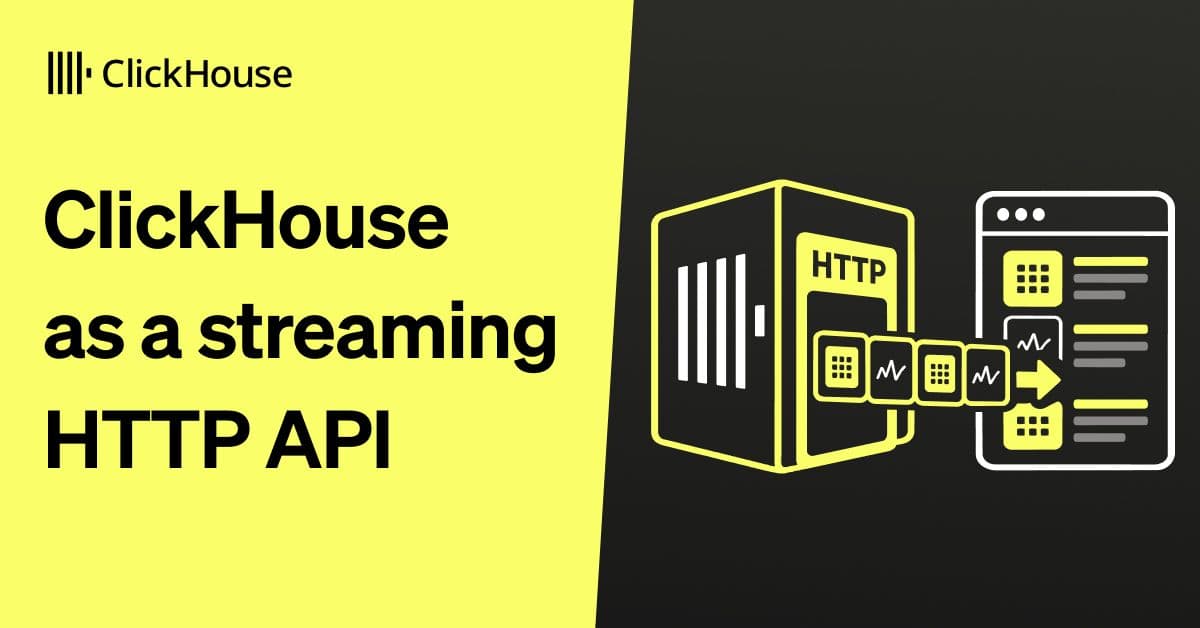
📖 Source: ClickHouse as a streaming HTTP API
Related Articles
Comments (0)
No comments yet. Be the first to comment!